

- September 5, 2026
- Posted by: Arfah
- Category: Blogs

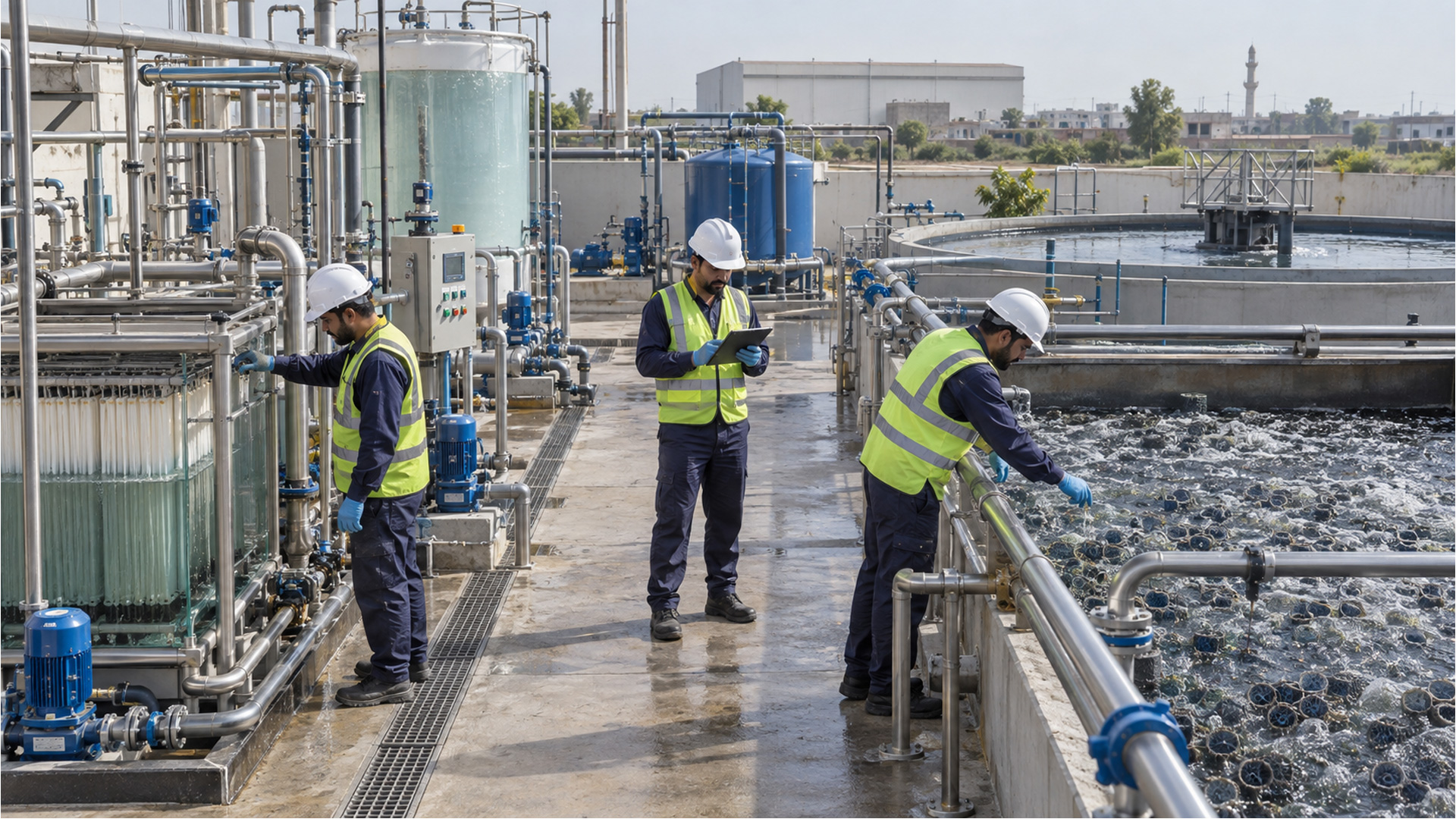 Factory-packaged equipment can reduce onsite assembly, but a containerized RO plant still depends on correct water, power, drainage, access and maintenance conditions at the destination.
Containerized RO systems are attractive for industrial facilities and remote projects because treatment equipment can be integrated into a transportable enclosure before reaching the site.
That does not mean the project becomes plug-and-play in every location.
A container arriving at a site without adequate foundation, feed-water connection, power supply, concentrate drainage or service access can quickly become an expensive storage box rather than an operating water-treatment plant.
Direct answer: Containerized RO plant site requirements should be confirmed before manufacturing and shipment. Important inputs include representative feed-water analysis, required production, foundation or support conditions, transport and crane access, electrical supply, feed and product-water connections, concentrate disposal, ventilation or cooling, chemical storage, drainage, operator access and maintenance space.
Containerization Changes the Packaging, Not the Engineering Fundamentals
A containerized RO plant combines treatment equipment within a transportable enclosure.
Depending on project scope, the packaged system may contain:
- Pretreatment equipment
- Cartridge filtration
- RO membrane vessels
- High-pressure pumps
- Chemical dosing
- Control panels
- Instrumentation
- CIP equipment
- Internal piping
The exact configuration depends on the project.
WWI’s Containerized RO Plants for Industrial and Remote Projects page remains the broader commercial owner. This article addresses the practical site-preparation intent.
1. Confirm Feed-Water Analysis Before Final Equipment Design
The RO system should be designed around the water that will actually reach the container.
Relevant analysis may include:
- TDS or conductivity
- Hardness
- Turbidity
- Iron
- Manganese where relevant
- Silica
- pH
- Microbiological condition where relevant
- Other source-specific constituents
If the water source changes after the RO system is manufactured, the pretreatment and recovery assumptions may no longer be appropriate.
2. Define Required Water Production and Operating Hours
Daily capacity should be connected with how many hours the plant will operate.
A project requiring 100 cubic metres per day over 20 operating hours has a different instantaneous production requirement from a project that must produce the same volume in eight hours.
Useful design inputs include:
- Daily permeate demand
- Peak demand
- Operating hours
- Treated-water storage
- Required water quality
- Future expansion
3. Prepare an Appropriate Foundation or Support Area
The container needs a stable and suitably prepared support arrangement.
The final civil design should account for:
- Container dimensions
- Operating weight
- Site soil conditions
- Drainage
- Level installation
- Access around the enclosure
The equipment supplier and local civil engineer should define responsibilities before delivery.
4. Check Transport Access Before Manufacturing Is Finalized
A technically correct container size is not useful if the delivery route cannot accommodate it.
Review:
- Road access
- Gate width
- Turning radius
- Overhead obstructions
- Bridge or route constraints where relevant
- Crane or lifting access
- Final placement area
Remote projects should review logistics early because transport limitations may influence container dimensions or modularization.
5. Define the Electrical Supply
Containerized RO plants still require suitable electrical power.
The project should confirm:
- Supply voltage
- Frequency
- Available electrical capacity
- Earthing requirements
- Protection
- Cable route
- Backup-power strategy where needed
Electrical data should be matched to the actual motors, controls and auxiliary loads within the supplied system.
6. Account for Motor Starting and High-Pressure Pump Load
The high-pressure pump can represent a significant electrical load.
Starting conditions should be considered along with normal operating demand.
Where variable-frequency drives or another starting arrangement is proposed, compatibility should be defined as part of the electrical design.
7. Prepare the Feed-Water Connection
The container needs a reliable source of pretreated or raw water according to the plant scope.
Site planning should define:
- Feed-water tank
- Available feed pressure
- Pipe size
- Required flow
- Isolation valves
- Connection location
If the container includes only part of the pretreatment train, the upstream site treatment must consistently provide water within the agreed feed specification.
8. Product-Water Storage Is Usually Separate from the Container
RO produces treated water continuously while operating, but site demand may vary.
A product-water tank can provide a buffer between plant production and user demand.
Storage design should consider:
- Required reserve volume
- Tank hygiene
- Level control
- Overflow
- Distribution pumping
- Post-treatment requirements
9. Concentrate Needs a Defined Disposal or Recovery Route
Every RO project creates a concentrate stream.
Before installation, the site should know:
- Expected concentrate flow
- Approximate concentrate quality
- Where the stream will go
- Whether further treatment is required
A remote site should not assume that RO reject can simply be discharged wherever convenient.
Where very high recovery is being considered, WWI’s Zero Liquid Discharge Plant scope may be relevant to a separate feasibility assessment.
10. Provide Drainage Inside and Around the Plant Area
Water treatment equipment requires drainage for normal operating and maintenance activities.
Possible drainage sources include:
- Filter drains
- Sampling
- Equipment leakage
- Membrane flushing
- CIP operations
- Floor washing
The site should prevent uncontrolled water accumulation around electrical and mechanical equipment.
11. Ventilation and Temperature Need Attention
A container creates an enclosed equipment space.
Pumps, motors, electrical panels and ambient conditions can contribute to internal heat.
Environmental design should consider:
- Outdoor temperature
- Solar exposure
- Internal equipment heat
- Ventilation
- Air conditioning where justified
- Electrical-panel operating limits
The correct solution depends on the equipment and project climate.
12. Chemical Storage Should Not Be Treated Casually
RO pretreatment may use chemicals such as antiscalant, pH-adjustment chemicals or cleaning solutions depending on the design.
The site should define:
- Chemical storage area
- Dosing-tank arrangement
- Ventilation
- Spill management
- Operator access
- Handling procedures
Chemicals should be stored and handled according to their applicable safety information.
13. Maintenance Space Must Be Designed Around Real Tasks
Containerized equipment is compact, but maintenance still requires physical room.
Operators may need access to:
- Cartridge filters
- Pumps
- Valves
- Membrane pressure vessels
- Electrical panels
- Dosing pumps
- CIP equipment
Membrane removal can require significant clear length in front of or behind pressure vessels.
This should be considered before equipment layout is finalized.
14. Spare Parts Need a Storage Strategy at Remote Sites
A containerized plant installed far from a major industrial area may face longer replacement-part lead times.
Depending on criticality, the project may consider keeping selected consumables and spares onsite, such as:
- Cartridge filters
- Dosing-pump service parts
- Instrument consumables
- Selected valve components
- Other project-specific critical spares
15. Remote Monitoring Can Support Operations but Does Not Replace Operators
Automation can provide useful information such as:
- Tank levels
- Operating pressure
- Flow
- Conductivity
- Alarm status
- Plant runtime
Remote data can help technical teams review plant performance, but physical inspection, sampling, cleaning and maintenance still require responsible onsite arrangements.
16. Containerized RO Still Needs Commissioning
Factory assembly does not eliminate site commissioning.
Before regular operation, commissioning should confirm:
- Correct site connections
- Instrument operation
- Pump rotation and performance
- Leak testing
- Chemical dosing
- Membrane loading and flushing
- Operating pressures
- Flows
- Product-water quality
- Control logic
17. Operator Training Should Be Defined in the Project Scope
Even highly automated RO equipment requires routine monitoring and maintenance.
Operator responsibilities can include:
- Recording flows and pressures
- Monitoring conductivity
- Replacing cartridge filters
- Checking chemical levels
- Responding to alarms
- Maintaining housekeeping
- Coordinating membrane cleaning
18. Site Responsibility and Supplier Responsibility Should Be Written Down
Many project delays occur because each party assumes another party will complete a required connection.
| Project Item | Responsibility to Define |
|---|---|
| Foundation | Local civil scope or supplier scope |
| Transport and unloading | Who arranges delivery and crane |
| Feed connection | Connection point and piping scope |
| Electrical supply | Cable and termination responsibility |
| Product-water tank | Supplier or site scope |
| Reject disposal | Site responsibility and defined destination |
| Commissioning | Included activities and site prerequisites |
| Operator training | Who is trained and what is covered |
Containerized RO for Africa and Middle East Projects
Containerized treatment can also be considered for selected regional projects where factory packaging, transportability and reduced onsite assembly offer practical value.
However, destination projects still require review of shipping, site access, electrical conditions, feed-water quality, local installation responsibilities, commissioning and spare-parts arrangements.
Regional buyers can review WWI’s Water Treatment Equipment Supply for Africa and the Middle East page for the broader international project framework.
A Site-Ready Containerized RO Project Starts Before Shipment
The strongest containerized RO projects separate what is completed at the manufacturing stage from what must be ready at the destination.
A well-defined site package should answer questions about water, power, drainage, civil work, access, product storage, concentrate handling and operator responsibility before the equipment arrives.
That is the practical value of reviewing containerized RO plant site requirements early: it reduces the risk that technically suitable treatment equipment reaches a site that is not prepared to operate it.
Request a Containerized RO Site Review
Share the project location, feed-water analysis, required capacity, electrical supply information and available site layout with Water World International. These inputs can help define the container configuration and destination requirements before manufacturing is finalized.
Frequently Asked Questions
What site preparation is required for a containerized RO plant?
Typical requirements include a suitable support or foundation, delivery access, electrical supply, feed-water connection, product-water storage, concentrate handling, drainage and maintenance access.
Is a containerized RO plant plug-and-play?
Factory integration can reduce onsite assembly, but the plant still requires appropriate site connections, commissioning and confirmation that water and electrical conditions match the design.
Does a containerized RO plant need a separate water tank?
Many projects use separate feed or product-water storage depending on the treatment configuration and demand profile. The required tanks should be defined during project design.
Where does RO reject water go?
The concentrate stream needs a project-specific discharge, recovery or treatment route. The correct option depends on concentrate quality, quantity and applicable site requirements.
Can containerized RO plants be used at remote sites?
Yes, where the treatment requirements and logistics support containerization. Remote projects should give additional attention to power, spare parts, operator support, communications and transport access.
Does a containerized RO plant require onsite commissioning?
Yes. Site commissioning is needed to verify connections, pumps, controls, dosing, pressures, flows, membrane operation and treated-water performance under the actual installation conditions.