

- June 26, 2026
- Posted by: Arfah
- Category: Blogs

🌊Why Untreated Textile Wastewater Is Costing Karachi Factories More Than They Realize
Pakistan’s textile sector plays a major role in exports and economic growth. However, it is also one of the largest industrial wastewater generators in the country. The discharge from dyeing, washing, bleaching, and finishing processes produces complex Textile Industry Effluent Waste that requires specialized treatment before disposal or reuse.
In Karachi and other industrial zones, improper management of textile wastewater is no longer just an environmental concern—it directly affects operating cost, water availability, and long-term business sustainability.
This guide explains what Textile Industry Effluent Waste contains, why it is challenging to treat, how modern treatment systems manage it, and how textile factories in Pakistan can turn wastewater into a controlled and recoverable resource.
If you are reviewing complete wastewater solutions, you can also explore Industrial Wastewater Treatment Solutions in Pakistan.
What Is Textile Industry Effluent Waste?
Textile Industry Effluent Waste refers to the wastewater generated during textile manufacturing processes such as:
- Desizing
- Scouring
- Bleaching
- Dyeing
- Printing
- Washing
- Finishing
This wastewater is chemically complex and often highly variable. Unlike simple industrial discharge, textile effluent changes composition depending on fabric type, dye formulation, salt content, and processing method.
Common characteristics include:
- High color concentration
- Elevated COD and BOD
- High TDS and salinity
- Fluctuating pH levels
- Suspended solids
- Chemical residues
Because of this complexity, textile wastewater cannot be treated using generic treatment systems.
Why Textile Industry Effluent Waste Is a Serious Issue in Karachi
Karachi’s textile units operate in a region already facing water scarcity and infrastructure challenges. Discharging untreated or poorly treated wastewater leads to:
- Environmental damage
- Groundwater contamination
- Public health risks
- Operational shutdown risks
- Reputational damage for export brands
- Increased freshwater demand due to lack of recycling
As global buyers increasingly demand sustainable production, textile factories must manage effluent responsibly.
Factories looking to implement structured treatment can review:
ETP Pakistan
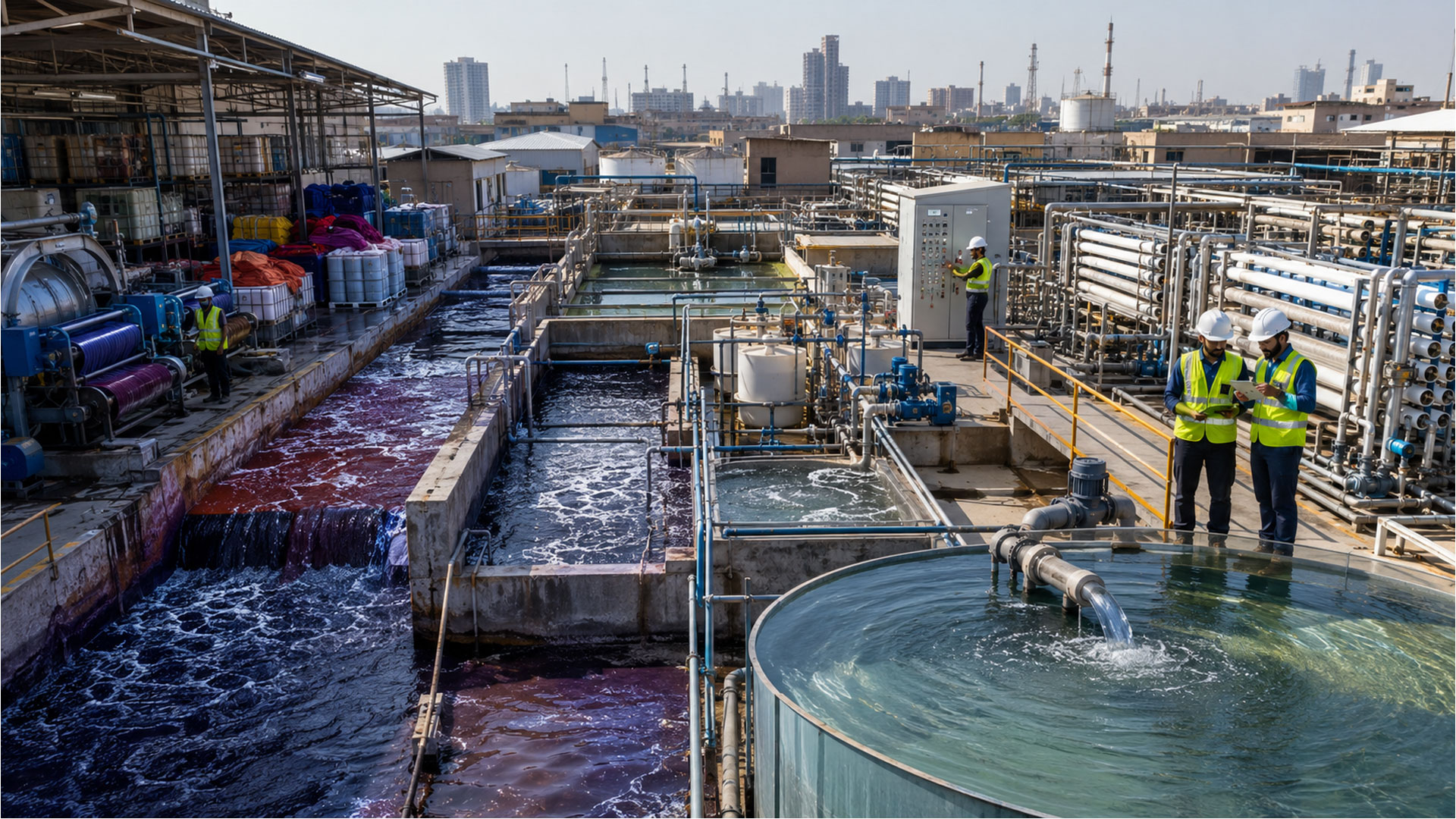 How Textile Industry Effluent Waste Is Treated
Effective management of Textile Industry Effluent Waste requires a multi-stage treatment process.
- Equalization
Balances flow and stabilizes wastewater characteristics. - pH Correction
Adjusts acidity or alkalinity to prepare for chemical treatment. - Coagulation & Flocculation
Removes suspended solids and color-causing particles. - Primary Clarification
Separates sludge from treated water. - Biological Treatment
Reduces organic load through aeration systems using blowers and diffusers. - Secondary Clarification
Settles biomass. - Advanced Polishing
Includes filtration, ultrafiltration, or reverse osmosis depending on reuse goals.
Explore:
Turning Textile Effluent Waste into Reusable Water
Modern textile facilities are no longer focusing only on discharge—they are focusing on recovery.
After primary and biological treatment, advanced systems such as:
allow factories to recycle treated water for non-potable or process reuse applications.
You can read more about structured reuse planning here:
Textile Effluent Recycling Pakistan
Common Problems in Managing Textile Industry Effluent Waste
Textile factories often face recurring issues such as:
- Color removal inefficiency
- High sludge generation
- Odor problems
- Membrane fouling in advanced stages
- Inconsistent effluent quality
- High chemical usage
- Frequent maintenance breakdowns
These problems usually arise due to:
- Incorrect plant sizing
- Inadequate equalization capacity
- Poor aeration efficiency
- Weak chemical dosing control
- Lack of preventive maintenance
Professional maintenance support is essential:
Water Maintenance Services in Pakistan
Cost Impact of Poor Textile Effluent Waste Management
Poor effluent management increases operational cost through:
- Excessive freshwater consumption
- Higher chemical cost
- Frequent system repairs
- Membrane replacement
- Energy inefficiency
- Production interruptions
A properly engineered system reduces long-term expenses while improving sustainability.
Integration with Complete Water Management Strategy
Textile wastewater treatment should not operate in isolation. It should be integrated with:
- Industrial RO systems
- Recycling strategies
- ZLD planning
- Process water optimization
- Preventive maintenance contracts
Complete system planning ensures both water supply and wastewater management operate efficiently.
Why Textile Manufacturers Trust Water World PK
Water World PK supports textile industries in Karachi and across Pakistan with practical, performance-focused solutions including:
- Effluent Treatment Plant (ETP)
- Textile Effluent Plant Design
- Industrial RO Plants
- Ultrafiltration Systems
- Textile Effluent Recycling Systems
- Zero Liquid Discharge Planning
- Wastewater Treatment Systems
With technical expertise and long-term support capability, Water World PK helps factories manage wastewater efficiently and sustainably.
Final Thoughts: Textile Industry Effluent Waste Must Be Managed Strategically
In Pakistan’s evolving industrial landscape, effective management of Textile Industry Effluent Waste is no longer optional. It directly affects compliance, cost, sustainability, and long-term competitiveness.
Textile factories in Karachi must adopt structured treatment, recycling integration, and preventive maintenance to stay efficient and future-ready.
Looking for Expert Textile Wastewater Solutions in Pakistan?
Visit Water World PK to explore customized effluent treatment, recycling systems, and advanced wastewater solutions for textile industries.
Contact Water World PK today for professional consultation and system design support.