

- June 27, 2026
- Posted by: Arfah
- Category: Blogs

💧Turn Textile Wastewater into Reusable Water in Karachi — Cut Costs, Improve Compliance & Protect Production
Pakistan’s textile sector is one of the country’s biggest industrial strengths, but it is also one of the largest water consumers. From dyeing and bleaching to washing and finishing, textile processing generates a high volume of contaminated wastewater every day. That is why Textile Effluent Recycling Pakistan is no longer just an environmental discussion—it is now a practical business requirement for cost control, compliance, and long-term operational stability.
For textile units in Karachi and across Pakistan, rising water costs, supply inconsistency, and stricter treatment expectations are pushing businesses to move beyond simple disposal practices. Manufacturers now need integrated solutions that treat, recover, and reuse water efficiently. If your facility is planning a broader treatment strategy, it is also useful to review water treatment solutions for the textile industry in Pakistan to align recycling goals with process water quality requirements.
💧Karachi Textile Factories: Recycle Effluent, Cut Water Costs & Improve Compliance in 2026
This guide explains what textile industry effluent is, why textile industry effluent waste needs specialized treatment, how a textile effluent plant works, and how recycling helps textile businesses in Karachi improve water recovery while supporting compliance and production continuity.
Why Textile Industry Effluent Is a Serious Challenge for Textile Units
Textile industry effluent is the wastewater generated during textile manufacturing operations such as desizing, scouring, bleaching, dyeing, printing, washing, and finishing. This wastewater is often chemically complex and highly variable, which makes treatment more challenging than standard industrial wastewater.
Unlike simple wastewater streams, textile effluent can fluctuate significantly depending on:
- Fabric type and batch size
- Dye chemistry and shade depth
- Salt and chemical dosing
- Process sequence and washing cycles
- Production load variations during the day
Common characteristics of textile industry effluent waste include:
- High color and turbidity
- High COD and BOD load
- Variable pH (acidic or alkaline)
- High TDS and salinity
- Suspended solids and chemical residues
- Sludge-forming contaminants
Because of this complexity, textile units typically need a purpose-built ETP Pakistan solution or a customized ETP services in Pakistan setup rather than a generic wastewater treatment configuration.
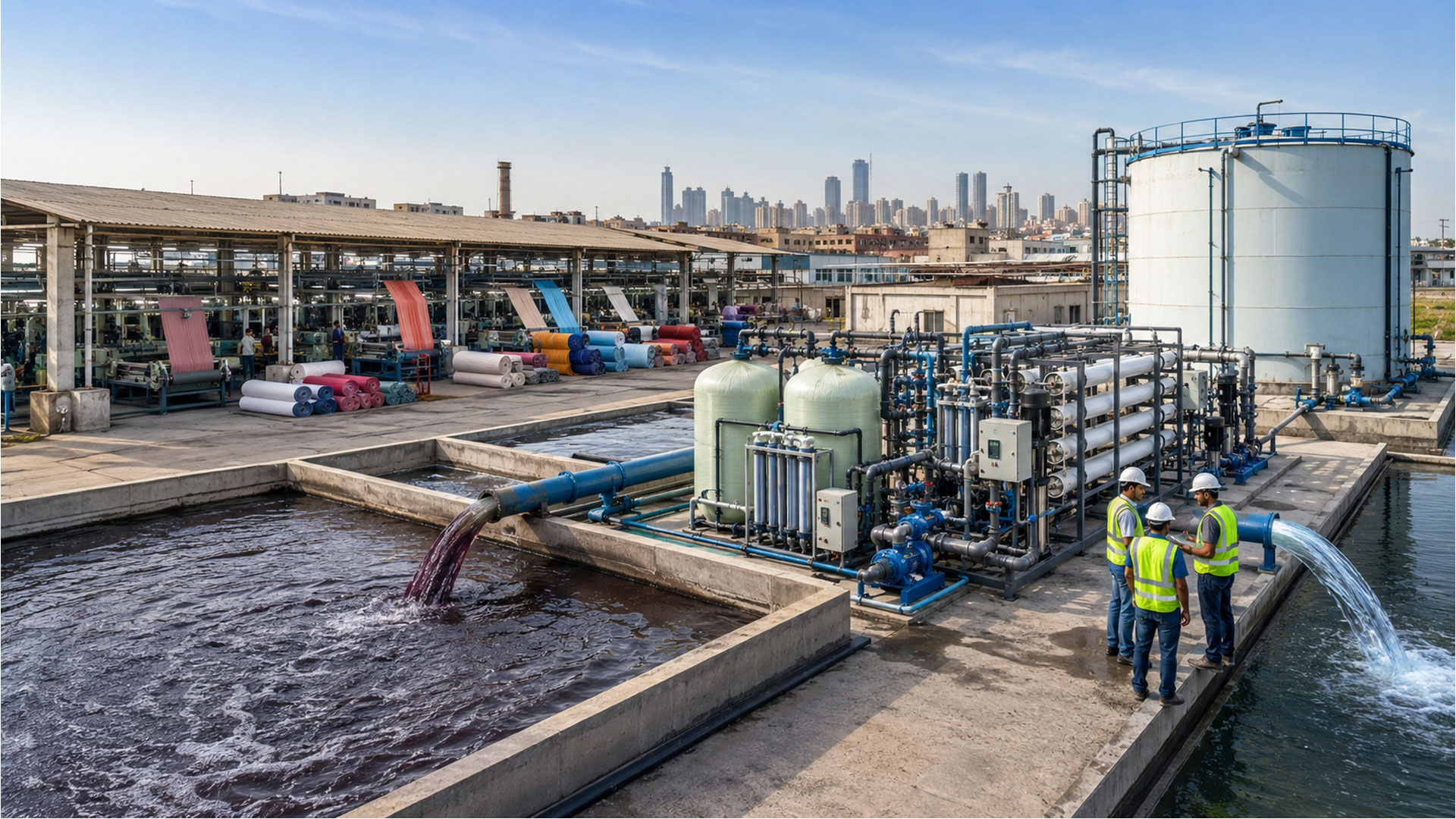 Why Textile Effluent Recycling Pakistan Matters More in 2026
In Karachi and other industrial cities, water management is becoming a strategic issue. Textile manufacturers are dealing with rising freshwater costs, operational pressure to reduce wastage, and growing expectations from local regulators and international buyers.
This is exactly where Textile Effluent Recycling Pakistan creates value.
By treating and reusing wastewater, textile businesses can:
- Reduce dependence on freshwater sources
- Lower water procurement and utility costs
- Improve production continuity during water shortages
- Reduce discharge volume and pollutant load
- Support environmental compliance and sustainability reporting
- Move toward advanced reuse and **Zero Liquid Discharge (ZLD) treatment process** planning
For many factories, wastewater is no longer just “waste.” With the right treatment design, it becomes a recoverable process resource.
What Is a Textile Effluent Plant and How Does It Work?
A textile effluent plant is a treatment system designed to handle complex textile wastewater and convert it into treated water suitable for discharge and/or reuse (depending on treatment level). In many cases, the plant is designed as part of a larger wastewater treatment system for textile and industrial facilities.
A textile effluent recycling setup usually combines multiple treatment stages.
Typical process stages in a textile effluent plant for recycling:
- Collection & Equalization
Wastewater from different process lines is collected and mixed in an equalization tank to stabilize flow and pollutant concentration. This is one of the most important steps for protecting downstream treatment performance.
- pH Adjustment / Neutralization
Textile wastewater may be strongly acidic or alkaline, so pH correction is required before chemical and biological treatment.
- Coagulation & Flocculation
Chemical dosing helps remove color-causing particles, suspended solids, and colloidal contaminants by forming flocs.
- Clarification / Settling
Settling tanks or clarifiers separate sludge and solids from treated water.
- Biological Treatment (where required)
Biological treatment reduces organic load and improves overall water quality, especially for wastewater with elevated BOD/COD. Performance in this stage depends heavily on aeration efficiency, which is why many plants use high-quality diffusers and blowers for stable oxygen transfer and treatment efficiency.
- Filtration & Polishing
Filtration stages improve clarity and remove finer contaminants before advanced treatment.
- UF / RO Membrane Treatment for Reuse
For higher-grade recycling, textile facilities often integrate **Ultrafiltration Plant** systems and **Industrial RO Plants in Pakistan** to reduce fine solids, dissolved salts, and remaining impurities.
- Recovered Water Storage & Reuse
Treated water is stored and reused for selected applications depending on the required quality level.
If you want to understand the wider industrial treatment framework beyond textile-specific systems, see industrial wastewater treatment solutions in Pakistan.
Where Recycled Textile Water Can Be Reused
One of the biggest advantages of Textile Effluent Recycling Pakistan is that treated water can be reused in many non-potable and process-support applications, reducing pressure on freshwater intake.
Depending on treatment quality, recycled water may be used in:
- Initial washing and rinsing stages
- Utility water applications
- Cooling and auxiliary systems
- Floor washing and housekeeping
- Landscaping / non-potable external use
- Process reuse (after advanced polishing such as UF/RO)
For facilities aiming for high recovery ratios, effluent recycling can be integrated with ZDHC-related wastewater management goals and Zero Discharge of Hazardous Chemicals (ZDHC) in Pakistan initiatives, especially for export-oriented textile units.
Common Challenges in Textile Effluent Recycling Pakistan Projects
Many factories invest in treatment equipment but fail to get stable recycling results. In most cases, the problem is not the concept of recycling—it is the wrong treatment design, poor operation planning, or weak maintenance support.
Common project issues include:
- Design based on assumptions instead of wastewater testing
- Undersized equalization or treatment tanks
- Inadequate pretreatment before UF/RO membranes
- Poor sludge management planning
- Unstable chemical dosing and process control
- Low aeration efficiency in biological treatment
- Lack of operator training and after-sales support
This is why effluent recycling projects should be planned by a team experienced in both effluent treatment services in Pakistan and advanced water reuse systems.
Karachi-Specific Planning Considerations for Textile Effluent Recycling
For textile units in Karachi, treatment and recycling systems must be designed around real local operating conditions. Water quality inconsistency, industrial load variation, and maintenance access all directly affect system performance.
Karachi-based textile businesses should prioritize:
- Robust design for variable influent quality
- Scalable treatment capacity for future production growth
- Reliable aeration, pumps, and instrumentation
- Membrane-friendly pretreatment for longer UF/RO life
- Serviceability and spare parts availability
- Energy-efficient operation for better long-term ROI
If your plant is currently using separate systems for water supply and wastewater discharge, it may be worth reviewing a combined strategy that includes both water treatment systems in Pakistan and wastewater recycling planning.
How Textile Industry Effluent Waste Impacts Cost, Performance & Compliance
Poor handling of textile industry effluent waste is not only an environmental issue—it also creates hidden operational costs. Many textile units lose money through water wastage, process instability, and emergency maintenance because wastewater is not treated and recycled properly.
Business impacts of poor effluent management may include:
- Higher freshwater and tanker water costs
- Production interruptions during water shortages
- Membrane fouling due to poor pretreatment
- Excessive chemical consumption
- Frequent breakdowns and performance drops
- Compliance and reputation risks for export markets
By contrast, a properly engineered textile effluent plant with recycling capability helps convert wastewater from a recurring burden into a managed resource.
Recommended System Integration for Textile Factories in Pakistan
For long-term results, textile effluent recycling should be integrated into a complete water management plan rather than treated as a stand-alone project.
A strong textile factory setup may include:
- **Effluent Treatment Plant (ETP) solutions in Pakistan** for primary and secondary treatment
- **Ultrafiltration plant planning / cost evaluation** for polishing strategy
- **Industrial RO plant solutions** for high-quality reuse applications
- **ZLD-ready treatment process planning** for maximum recovery goals
- **effluent water treatment plant service and supplies** for plant reliability
- **wastewater treatment services in Pakistan** for operations and maintenance support
This integrated approach is especially valuable for export-oriented textile manufacturers that need both performance consistency and sustainability credibility.
How to Choose the Right Partner for Textile Effluent Recycling Pakistan
Choosing the right treatment partner is one of the most important decisions in any recycling project. Price matters, but in textile wastewater treatment, design quality and support capability matter far more over time.
When evaluating a supplier or engineering partner, look for:
- Practical experience with **textile industry effluent** treatment
- Wastewater testing and process-based design approach
- Customized solutions (not one-size-fits-all packages)
- Capability in ETP + UF + RO + recycling integration
- Strong installation, commissioning, and operator training support
- Reliable after-sales service and troubleshooting response
- Upgrade support for recycling expansion and ZLD readiness
For many textile businesses, the best results come from working with a partner that can support both treatment and long-term system performance—not just equipment delivery.
Why Textile Businesses Trust Water World PK for Effluent Recycling Solutions
Water World PK provides practical, industry-focused solutions for factories that need consistent water treatment performance and reliable technical support. For textile and industrial clients in Karachi and across Pakistan, Water World PK supports solutions related to:
- **Wastewater Treatment System**
- **Effluent Treatment Plant (ETP)**
- **Zero Liquid Discharge (ZLD) Plant Process Solutions**
- **Industrial RO Plants**
- **Ultrafiltration Plant**
- **Textile Water Treatment Solutions**
Whether you are planning a new textile effluent plant or upgrading an existing treatment line for recycling, the right results come from proper assessment, correct technology selection, and dependable maintenance support.
Final Thoughts: The Future of Textile Water Management in Pakistan Is Recycling
With rising water stress and stronger environmental expectations, Textile Effluent Recycling Pakistan is becoming a practical necessity for modern textile manufacturing. A well-designed treatment and recycling setup helps reduce freshwater dependence, improve compliance, and support long-term business resilience.
For textile units in Karachi, this is the right time to move from wastewater disposal thinking to wastewater recovery planning. The right textile effluent plant can help your business treat complex textile industry effluent waste and convert it into usable water for real operational value.
Looking for Expert Support for Textile Effluent Recycling in Karachi & Pakistan?
Visit Water World PK to explore customized solutions for Textile Effluent Recycling Pakistan, ETP upgrades, RO/UF polishing, wastewater reuse planning, and ZLD-ready treatment systems.
Contact Water World PK today for a professional assessment and a tailored solution for your textile operation.